Preparing for Injection Molding Resin Selection
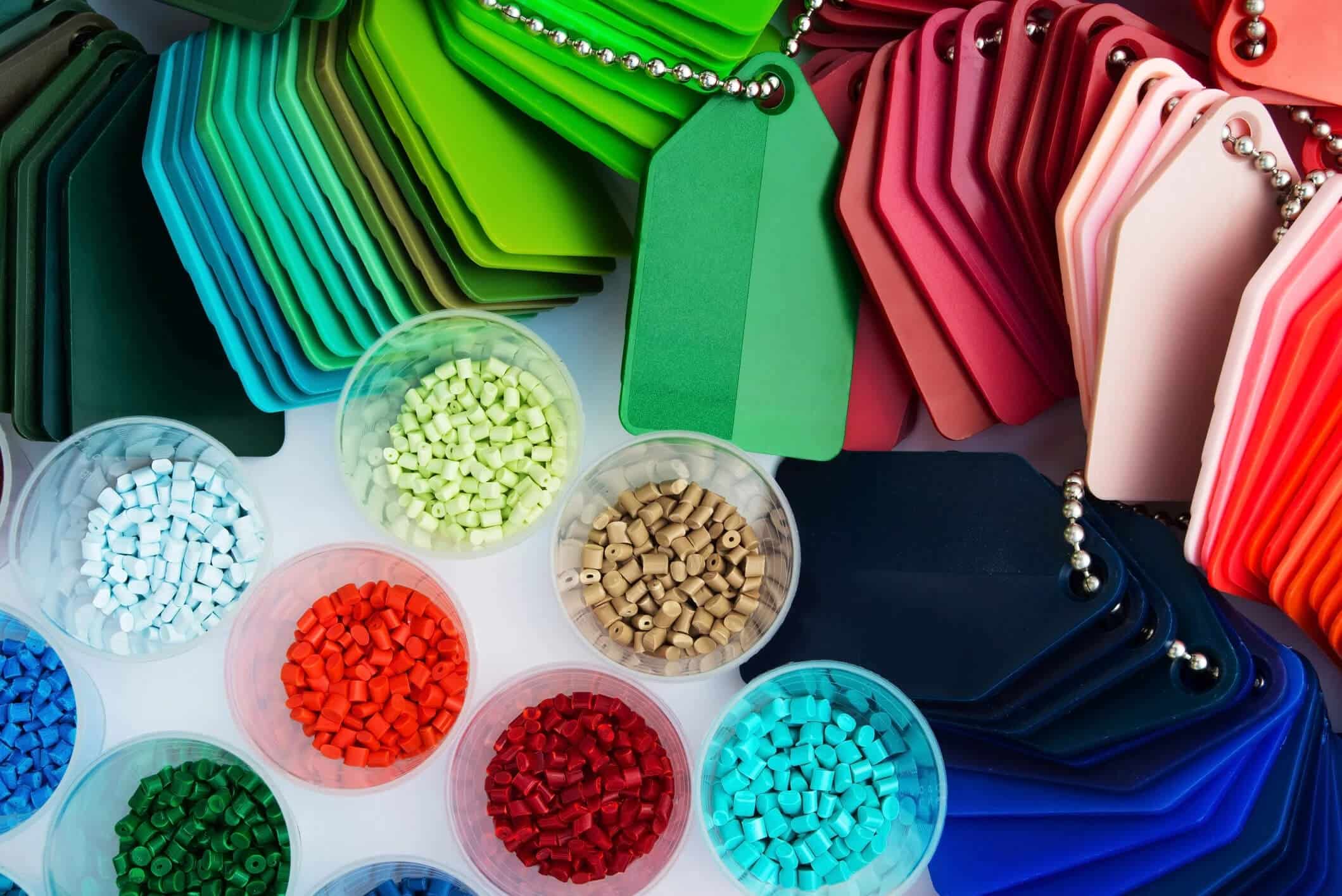
Manufacturers use a wide range of plastics to mold parts that are incorporated into products and have increasingly started replacing materials like bronze, stainless steel, aluminum, and ceramics.
Some of the most popular reasons for using or switching to plastic include longer part lifespan, reduced wear on other product components, faster production line speeds, corrosion resistance, and weight reduction. In addition, companies report an average 25–50 percent cost savings when parts are converted to plastic, which often exhibit superior performance characteristics.
Working closely with your injection molding partner to choose the best resin early in the design for manufacturability process is crucial to a part’s production success. A good starting point is to have a general understanding of the two main types of resins: amorphous and semi-crystalline.
Polymers are made up of structures defined by crystallinity—or how the molecules of the polymer are packed together. Crystalline structures are usually very ordered, giving the material strength and rigidity. Amorphous polymers are the opposite.
Sometimes, the distinction between the two is not clear-cut. Most polymers have a mix of both crystalline and amorphous structures. How the polymer is processed determines the exact proportion of each.
Amorphous
Amorphous resins include most clear plastics such as polycarbonate, acrylic, PETG, ABS, and polysulfone. They are a high-temperature family of resins that can often be substituted for one another in the same injection cavities since the linear shrinkages fall within the same range.
Pros:
- -Softens over a broad temperature range
- Naturally translucent
- Bonds well with adhesives and solvents
- Minimal shrinkage as it cools
Cons:
- Prone to stress cracking
- Poor fatigue resistance
- Best for structural applications only (not for bearing and wear)
- Low dimensional stability
- Tendency to creep
Semi-crystalline
Semi-crystalline resins have a highly ordered molecular structure and do not soften as temperature rises; instead, they have a defined and narrow melting point. The melting point is generally higher than the upper range of amorphous thermoplastics. Some of the most common semi-crystalline plastics are Nylon and Acetal.
Pros:
- Good resistance to stress cracking
- Good fatigue resistance
- Good for bearing and wear as well as structural applications
- Tends to be opaque and reflect light
Cons:
- Sharp melting point
- Hard to bond with adhesives and solvents
- Greater shrinkage as it cools
When flexibility at low to ambient temperatures is needed, amorphous polymers are the best choice for your application. When hardness and rigidity are required, polymers with greater crystallinity are recommended.
In addition to the more commonly used amorphous and semi-crystalline resins, there are high-heat and exotic resins that offer unique properties and characteristics, making these materials ideal for various part features and applications.
When considering the intended end use for your injection molded part, understanding these key characteristics is essential to selecting the best resin:
Part Appearance and Geometry
A part’s overall appearance and geometry significantly impact molding capability and the type of resin that should be used. Part design—including size, shape, and wall thickness—can make a part prone to defects, while features like snaps, undercuts, bosses, ribs, and more can complicate the molding process.
Identifying potential risks for part defects before production is an essential step in injection molding. It is crucial for injection molders to use the latest technology to run simulations validating the design and resin choice before finalizing the project for production. SolidWorks® Premium plastics flow simulation provides predictive insight in the early stages, which can often reduce overall time to market.
Part Strength and Flexibility
Material selection plays a critical role in the strength and flexibility of your molded part. Addressing specific needs early in the design process can help you avoid costly changes later. Balancing characteristics like stiffness, durability, toughness, and more is key to achieving optimal part functionality. Additionally, it’s important to understand the key differences in some of the most commonly used resins.
ABS (acrylonitrile butadiene styrene) is a common injection molding material that can be sourced and molded relatively easily, at an accessible price point. It’s a strong, durable material that offers good impact resistance, is easy to machine, and meets a variety of aesthetic requirements. The resin is not ideal for parts that will be exposed to sustained high heat, as it will warp or melt above or around 200 degrees Fahrenheit.
Polycarbonates are a high-grade class of thermoplastics that are easy to mold and often increase shatter resistance. Naturally transparent, polycarbonate is ideal for high-strength, glass-like applications (safety goggles, medical lab uses, and more). Polycarbonate isn’t suitable for applications where a higher degree of flexibility is required or for colored aesthetic choices.
Glass-filled nylon is a reinforced thermoplastic where the base nylon resin has glass fibers added for additional strength and heat resistance. This resin is also more nonconductive to electricity than many others, but despite its high melting point, it is more susceptible to burning than other materials.
Polypropylene is a flexible thermoplastic suitable for industrial and consumer applications. It’s known as a highly pliable resin that can be manipulated in many ways without losing its original shape. Polypropylene also offers resistance to solvents, chemicals, and UV rays.
Acetal is known for providing excellent friction resistance and is a highly rigid material. It can be easily colored and dyed during the molding process; however, it does not offer superior heat resistance.
Chemical and Environmental Factors
Understanding the conditions and environmental factors a part will be exposed to is an important consideration in the design and resin selection process. Physical, chemical, and thermal environments are likely the most important to keep in mind. Many resins are at risk for degradation when exposed to radiant and ultraviolet energy, which can cause the material to break down. Extreme temperature, humidity, radiation, and other environmental factors, including the possible need for fire resistance, should all be taken into account. Knowing the environment in which a part will be used simplifies choosing the best resin as you consider each material’s unique properties and benefits.
Regulatory Requirements
Product regulatory requirements can present unique challenges during the plastic injection molding and resin selection process. Parts often must pass requirements before being released to the market. These may include compliance with ASTM, ANSI, OSHA, FDA, EPA, and more.
Using Additives
When material performance cannot be achieved with standard resins, custom blends of materials can be created to enhance the properties of several resins. Reinforcing materials with additives can add strength to parts and increase stiffness, potentially reducing warping and shrinkage. Additives like glass or carbon fibers can be used to improve part performance and enhance flow, ejection, and dispersion.
One of the most important steps when preparing for injection molding resin selection is to create a comprehensive material selection list of requirements for the product. The list should definitely include price targets and resin availability—because resin availability can be a risk, and backup resin options should be considered. Available resin types, part appearance, part strength, environmental factors, regulatory requirements, and whether an additive will be needed are all important considerations that should be weighed carefully before starting an injection molding project. In addition, it’s always best to review specifications for generic versions of polymers, as these materials’ characteristics may be a good fit for your application.
Are you starting a project that will need the help of an experienced plastic injection molder? Learn how Plastic Components, Inc. strives to be your best supplier and a team you can count on.